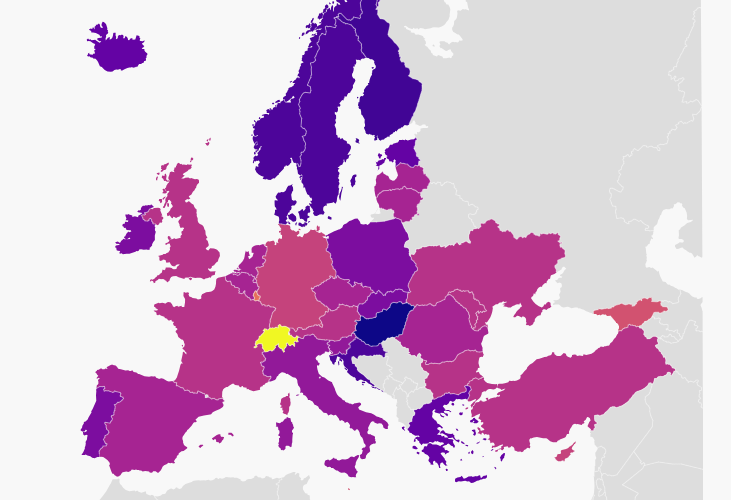
- Most countries globally, including all major European ones, implement a Value-Added Tax (VAT), which is a consumption tax applied at each production stage, with the end consumer bearing the full cost.
- European Union Member States have varying VAT rates, though somewhat harmonized, with Hungary having the highest standard rate at 27% and Luxembourg the lowest at 17% as of January 2026.
- While reduced VAT rates and exemptions are often used to promote equity or specific goods, they can be inefficient and create distortions; direct income support for lower-income households is suggested as a more effective alternative.
Source Tax Foundation

Latest Posts in "Europe"
- Digital ATA Carnets Go Live for Temporary Exports to UK, Switzerland, and Norway
- Deloitte European VAT Refund Guide 2026
- Fiscalization Updates in Hungary, Romania, Belgium and Croatia for 2026
- Fiscalization Changes in Europe: Hungary, Romania, Belgium and Croatia Update
- Amazon Pan-European FBA and VAT Obligations: What Every Cross-Border Seller Must Know Before It Costs You