
- The case involves the VAT liability of Invisalign clear aligners supplied by Align Technology Switzerland GmbH and Align Technology BV.
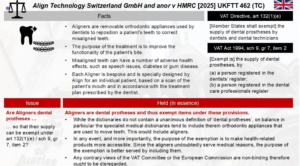
- Aligners are removable orthodontic appliances used to correct misaligned teeth and improve bite functionality.
- Align treated the aligners as exempt supplies of dental prostheses under the Value Added Tax Act 1994.
- HMRC decided that the aligners were subject to VAT at the standard rate, leading Align to appeal.
- The main issue was whether the aligners qualify as dental prostheses under the relevant VAT legislation.
- The tribunal ruled that the aligners are dental prostheses for VAT purposes, allowing Align’s appeal.
Source: bailii.org
- There is a growing trend towards purposive interpretation of statutes, moving away from overly literal interpretations that were previously common.
- This shift has been described as a departure from what Lord Hoffmann referred to as the “dark ages of word magic.”
- In the current tribunal decision, the purpose of the exemption was key to achieving a sensible outcome based on common sense.
Source Fabian Barth
Note that this post was (partially) written with the help of AI. It is always useful to review the original source material, and where needed to obtain (local) advice from a specialist.
Latest Posts in "United Kingdom"
- Mandatory B2B e-invoicing as of April 2029
- Policy paper – Plastic Packaging Tax: mass balance approach and removal of pre-consumer plastic
- VAT in the UK – A comprehensive up to date guide
- Autumn Budget 2025: Key VAT and Indirect Tax Changes Impacting UK Businesses and Charities
- VAT Exemption for Locum Doctors: Key Implications for NHS Trusts and Medical Providers