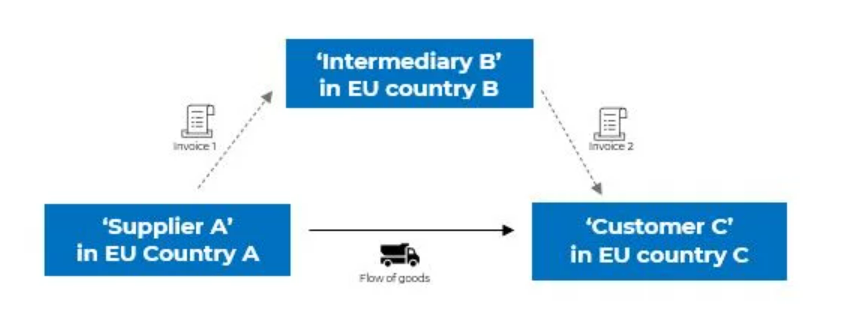
- Simplified Compliance for VAT Transactions: The EU’s introduction of the simplified triangulation method under the VAT Directive aims to ease compliance and trade, allowing EU-taxable persons to significantly reduce their VAT reporting burdens in triangular supply chain transactions.
- Transaction Flow: In a typical scenario, goods are sold from one EU VAT-registered supplier to an intermediary, who then supplies them directly to an end customer in a different Member State. The intermediary can use the simplified triangulation method to avoid registering for VAT in the destination country, simplifying the process of reporting intra-community acquisitions.
- Reporting Obligations: The first supplier issues an invoice for a zero-rated intra-community supply, which is reported in their domestic return. The intermediary issues a VAT-exempt invoice to the end customer under the reverse charge mechanism, reporting this transaction as a simplified triangular supply, while the end customer accounts for the transaction in their local VAT return on a self-billing basis.
Source 1stopvat
Latest Posts in "European Union"
- Does a Subsidiary Create a Fixed Establishment for VAT? Insights from Dong Yang Electronics Ruling
- CJEU’s Titanium Ltd Ruling: Redefining Fixed Establishment for Cross-Border VAT in the EU
- EU Parliament Proposes 200 Amendments to Modernize VAT and Tax Rules for Financial Sector
- VAT Concepts Explained: Bad Debt Relief and VAT Credit Notes
- Commission welcomes selection of Lille as seat for EU Customs Authority